Episode Transcript
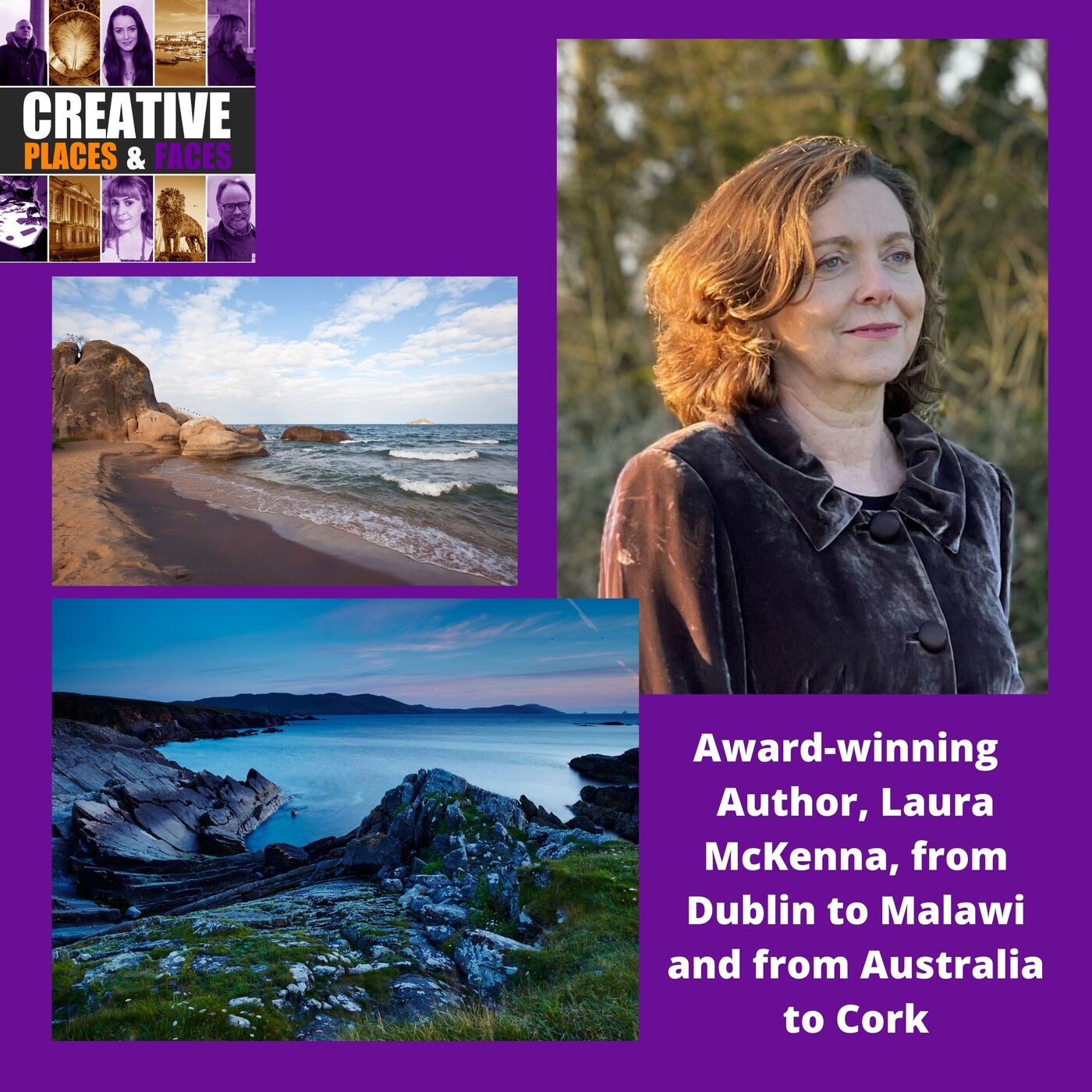
[00:00:02] Speaker A: Today's guest was winning writing competitions as a child, but actually went on to study medicine. She worked for many years as a child psychiatrist, but then around the age of 40, she did her first writing course. After which, and I'm quoting this particular person, she was like a lunatic driving home full of ideas and lines for poems. Now Fast forwarding to 2021. Her debut novel, Words to Shape My Name, has been shortlisted for the Kerry Group Irish Novel of the Year award.
It tells a story of the relationship between Lord Edward Fitzgerald and his manservant Tony Small.
The British author Hilary Mantle describes it an ambitious and vital novel with an epic sweep. A complex, timely story about liberty, equality, identity.
This book is an act of salvage.
It was long listed for the 2019 Bath Novel Award and was a winner at the 2020 Irish Writers Centre Novel Fair.
Thanks so much for taking the time to join us today. Laura McKenna, your debut novel has left me with a really deep admiration for your writing and your ability to express so wonderfully details of someone's life that was so vastly different from your own.
[00:01:23] Speaker B: Thank you, Jackie. Thank you very much for that. And it's a pleasure to be here, actually, and have a chance to talk about travel and my novel. So thank you very much.
[00:01:35] Speaker A: Thank you very much, Laura. So just again, I've done this for many of the more recent episodes. We're recording this in August of 2021.
We still have the pandemic sadly going on, even though there's a lot of vaccinations and I am based in Spain and Laura is based in Cork in Ireland. Now, my favorite quote, normally that I would always start off the podcast with, is wherever you go becomes a part of you somehow by Anita Desai. But in your case, Laura, I'd love to add a quote from Words to Shape My Name, which is on page 78.
Those years of travel.
A man cannot travel the world, A man be left untouched by it. Let's talk about these quotes, Laura.
[00:02:20] Speaker B: Thank you, Jackie. And yes, it is interesting that the book, my book, Words to Shape My Name, Travel and journey feature quite significantly in it, including the quote you mentioned. But maybe I'd start first with the quote by Anita Desai.
Wherever you go becomes a part of you somehow. And that's something I very much agree with. I think even if you don't know how, how it's become a part of you or in what way you've incorporated it, place places do become part of you. And now that may be just some memory that could be triggered long after the event it could be something.
One that you've learned about a new culture or place or taken on board. And that could be just the tiniest interaction, something seemingly insignificant.
And, of course, there's also ways in which I suppose place can have almost a physical effect on you, that there could some embodiment of the place, either, you know, something bad that has happened or something good, but could leave some sort of physical mark on you. And I think sometimes that's something I feel if I go to a place that is very different. And it's that first impression often. And that could be. It could be a visual thing. It could be some other sensory thing which is almost, you know, that sense of it being seared on your memory. Because actually, I have a very bad memory.
But those sort of memories are the things that almost seem to be seared on it in a, you know, like a visual, a kind of filmic image or a smell that can just bring me right back there. So, yes, I do think wherever you go definitely becomes part of you, as Anita says in that quote.
But to go on, then, to the other one, which from my novel about those. A man cannot travel the world and let.
And be left untouched by it. And I think that's almost slightly different from the first quote, which is about place, because this one's about travel. And travel has a different quality to it, as I'm sure you know. You're very familiar with this yourself, Jackie, that sense of it being active, and it involves a leaving and an arriving. And that's what I find particularly fascinating is the leaving. What are you leaving behind? And sometimes it can be, you know, bad things that are being left behind, or sometimes good things. And then. So travel can become something, you know, it has those sort of binaries of opportunity and loss. And I think that in the book where the character of Tony Small, who was a man taken from his home country, a man who was enslaved, forcibly, you know, there were huge losses for him in leaving his home country and then being brought to this harsh and inhospitable environment, you know.
So for him, that first travel was something terrible. The losses were terrible for him.
But he then had the opportunity to travel the world along with Edward Fitzgerald. And then there were opportunities there, and also opportunities with regard to his identity, which meant much of which had been left behind originally. But then he had a chance to change it. And I think that's the same for all of us who travel. There are opportunities. Opportunities, you know, to meet new cultures and to learn, as Edward Fitzgerald in the novel did. When he came into contact with other societies and he became more democratic. So there's huge opportunities as well as losses. And I find that really interesting and how identity is bound up in that.
[00:05:57] Speaker A: That's a fantastic answer. Yeah. And it's also very, very true in my own personal experience and I'm sure will resonate to a lot of listeners now. What places, Laura, have become part of you and your life to date?
[00:06:11] Speaker B: Well, the first place, obviously, where I was born and raised, which was in Fox Rock in Dublin.
And that was sort of a very.
It was a new, new housing estate, relatively new. I mean, I have two older siblings, so they were the first in it, and then me.
And we were a family of six in I suppose, quite a middle class environment.
So that, that's where I was born and raised and where my mother still lives and a place I go back, obviously, all the time. So still very much with me within that, you know, growing up, there would have been visits to my grandparents, both in Glasnevin and up in Fermanagh. And Fermanagh was a very important place for me because it always seemed sort of otherworldly, as though I was almost entering a film or something.
And the whole border element of that really came into play for me. I mean, maybe I could talk about that later. But yeah, that was a really significant place.
[00:07:12] Speaker A: And let's. Sorry to interject there, Laura, let's place Fermanagh for our non Irish listeners, just to give the placement of Fermanagh because not everybody will know, you know.
[00:07:26] Speaker B: Okay, yes, sure. So Fermanagh is in Northern Ireland, in Ulster, and it's one of the six counties separated by the border. And when I was growing up, the border was very significant. It was very significant. Scary. And for a child. Well, for anybody. But, you know, those are memories that would stick with me of crossing the border and other funnier, funnier ones of crossing the border, the whole customs thing. But yes, that's where Fermanagh is. And my father's family lived in a very small village called Irvinstown.
[00:07:58] Speaker A: Okay.
[00:07:58] Speaker B: But it was, you know, a very interesting place for me as a child.
So that was kind of. There were my childhood kind of places. Oh, and Rush, where we used to go on holidays. Rush in north County Dublin. That was a seaside place, an old style kind of hol place. And we used to go there on holidays.
But then moving on to college, I am, you know, I had that kind of typical, in some ways, UCD holiday, J1 visa trip to America, although. Yeah, I know. And it's Sort of a rite of passage, isn't it? Nearly.
[00:08:34] Speaker A: I think so, yeah.
[00:08:35] Speaker B: Yeah. But in my case, I. A lot of people went to the east coast, but myself and a friend of mine, a good friend of mine, we went to California, where we worked in San Jose in a hospital. Both of us worked as nurses aides. At the time, we were both medical students, so we got jobs as nurses aides and just had an incredible experience actually traversing the coastline of California. You know, a fabulous time.
And then another opportunity that presented during those college years was to join what was called the. What was it? The Medical Students Overseas Relief Fund, and whereby medical students travel to various countries with the purpose, I suppose, of helping out in some way, although that wasn't quite the case as it transpired in mine. But I went to Malawi and we worked in a hospital. We attended a hospital in Zamba. And it was the most incredible experience, both the people and the hospital and then the wider landscape and places that we visited. That was something. Oh, yeah, And I forgot to say, actually, that that followed on from a previous very significant trip for me, which was to Kenya when I was 16. I wanted. I won a local competition and spent two weeks in Kenya. Yeah. Really?
[00:09:54] Speaker A: That's.
[00:09:55] Speaker B: Yeah.
[00:09:55] Speaker A: Amazing. And so young as well. That must have had a big impact. So, like. Well, we can explore that, obviously, in more detail.
Just going back to your childhood places, Laura, you know, talking about, you know, we've got Fox Rock, Fermanagh and Rush.
It's interesting, kind of like contrast there, isn't it, for the Irish people who will get that, obviously.
Do you feel that they sort of affected you, like perhaps, you know, in your subconscious or creatively? What do you think about that?
[00:10:29] Speaker B: I mean, obviously I've been thinking about this and about place and places that affected me, and I always felt that my home place. So growing up in Fox Rock, I kind of think, well, now, that didn't really affect me. But of course that's, you know, that simply isn't true. You know, it provided a place of kind of, I suppose, stability.
And even though I wasn't writing very much, and I certainly don't believe I've used much of that creatively, you know, at the same time, it provided the kind of the fertile ground for other things to come from because it was a place where books were very much to the forefront. I know, you know, many people say this, but it is true. We were those kind of nerdy children who went to Cabuntily Library during our summer holidays.
That was the excitement. I Knew every. Where every book was on those shelves and so would my siblings, you know, and then we'd swap the books and cycle our way back. So that was very, very much part of it. Yeah.
Yeah.
[00:11:28] Speaker A: That's brilliant. And I was doing the same in Dundrum.
[00:11:30] Speaker B: Where are you reading? The local library.
[00:11:32] Speaker A: That's why I'm laughing. Yeah.
[00:11:33] Speaker B: They were so important, weren't they?
Totally, yeah. And so, you know, that was important. Books are important. My mother was very keen on poetry and actually my father secretly too, although he didn't, you know, he used to write his own ones because he was. He worked in as an engineer and so he wasn't expected to be interested in anything like poetry. But. But he had his moments. He used to announce in the mornings, I arrives and go now and go to the esb.
[00:12:00] Speaker A: Okay.
[00:12:01] Speaker B: A small substation builder. So he had a bit of Yates in him after all.
But then beyond that, the holidays in rush were that kind of once a year thing. We took a house for a few weeks or a month, I can't quite remember, and our cousins from England came over and we went about as a pack and we were kind of let loose, which is. Was quite strange because at home we were kept on a very tight leash, really. My mother, you know, knew where we were for everything, but we were let to have the run of that place. So it was a great experience, you
[00:12:34] Speaker A: know, quite, quite a contrast. So, yeah, you were mentioning there, Laura, that your. Your. Your father was an engineer. That was for the Ireland's electricity company, the sb.
[00:12:44] Speaker B: That's right, yeah.
[00:12:45] Speaker A: When we were communicating before today, you were. You also mentioned that your mum was really great at keeping yourself and your five siblings busy and on top of your schoolwork.
[00:12:53] Speaker B: Yes.
[00:12:54] Speaker A: Looking back and the lovely quote that you just mentioned about your dad there, looking back, how do you feel your parents contributed to the person you are today? That I would consider to be a very high achiever and a creative person.
[00:13:08] Speaker B: I think things were kept very steady at home. I don't really know how to explain that. My mother did take a great interest in our schoolwork and, you know, how we were doing. And I mean, she was one of those mothers and still is who wants to know how else everybody else was doing too. And you know, where you were kind of, but took a real interest in it and in the teachers and kept us, you know, we did our work and kept us very steady. And she had some great phrases coming up to exams like you'll have to draw in your horns. We never quite knew what she meant, but it was that we had to study.
It's not that we were up to much anyway. And then my father had a more laid back attitude, but I suppose he probably just expected us to, you know, to do what we should do.
But equally then, they were very supportive and keen on doing, you know, the writing, little bits of writing, or, you know, my sisters, two of them were very artistic and again, they would have been very supportive of that, of art, etc. So, you know, it wasn't that they were sort of banging on about achievement all the time. There was plenty of room for other things, too.
[00:14:19] Speaker A: Okay, that sounds quite, almost idyllic. Obviously very grounded in terms of, you know, it was just sort of naturally expected of you to do. To do well and to do your studies, but yet artistic. Yeah, it was fantastic.
[00:14:33] Speaker B: Wonderful.
[00:14:33] Speaker A: Now, were there any other family members or teachers that you kind of remember as encouraging you back then?
[00:14:39] Speaker B: I think what I remember is that in my mother's family in particular, there was, you know, a very artistic streak. I've got an uncle and John Dinan, who's a professional artist. So, you know, there was. I wonder that's possibly where that artistic thing came from with regard to teachers. I had a particularly good English teacher at school who sort of often went off curriculum, if you know what I mean. And he was great. He was very supportive in a very laid back way. I mean, I can't say he singled anybody out, but, you know, I think he was very appreciative of any, you know, work that was submitted that he thought was good. So. Yeah, and I also had a really good history teacher who certainly stimulated my interest in history, which is very strong still.
Yeah, they were really good. Maybe I should mention their names. There was a. I can't remember if you wish. The history teacher was a Ms. Borden and the English teacher was Declan O'. Neill. So.
[00:15:43] Speaker A: Okay, that's fantastic. So hope. Hopefully one or both of them might somehow or other get to listen to this.
So obviously you started writing as a child and what were you writing? What do you feel inspired you back then, Laura?
[00:15:59] Speaker B: Oh, I was, you know, I'd done, you know, all that reading that little ones do, I think often inspires people to think, I could do that or I'll have a go at that. So I was right. But it was really funny enough. It was more poems or ditties or what rhyming kind of things that I was writing rather than stories.
And I. Yeah. And, you know, my mother was great at finding competitions. Now it sounds Like, I was entering a lot. I probably entered about three. Three different things during those years, but little things. Like, I think I won some Dublin County Council competition.
It was to write about trees. You were to write a story. But I wrote a little poem about a tree saving me from a witch when I was about 7 or 8. And I won a beech tree as a result.
So that was the kind of thing I was doing, little poems.
[00:16:50] Speaker A: How did you get the beech tree? How did that work?
[00:16:52] Speaker B: Oh, that was the prize.
Oh, okay.
[00:16:55] Speaker A: That's interesting.
[00:16:56] Speaker B: I don't know where it is, but it's certainly not growing in that back garden up at home, I can tell you that much.
[00:17:03] Speaker A: That's gas. That's. That's a funny prize to give a child, isn't it?
[00:17:06] Speaker B: Yeah, well, it was a tree competition.
[00:17:11] Speaker A: Yeah.
[00:17:12] Speaker B: Okay.
[00:17:13] Speaker A: Now, you did describe a poem in. In your information before today's chat that you wrote as a child, obviously inspired by a Tony Christie song, as these were your words as. As a. As a maudlin.
[00:17:28] Speaker B: I did what I did for Maria, like my parents. These are the songs we were listening to as children.
And yes, I wrote a poem about that, a similar poem, definitely inspired about a man who was waiting his last morning before he was hanged. So a very maudlin song or a poem.
And, you know, he has a vision of a visit from his mother, but it's not his mother, it's the jailer. So, yes, I, you know, there was that tendency to write maudlin poems, but it's not that unusual, I think, for children of that age to get a bit maudlin, because I think children do, around that age do start thinking about things. And I know the whole idea of infinity and eternity and these sort of concepts used to nearly drive me nuts. So, you know, there was a lot of thinking going on. So it definitely chimed with me, that kind of a poem and that kind of a song. But of course, my teacher refused to have it put into the end of year 5th class anthology because it was far too maudlin, not suitable.
[00:18:39] Speaker A: That's. It's interesting. So, I mean, yes, I suppose you're right insofar as you say, and you would know better than most people, obviously, as you went on to work for a long time as a child psychiatrist, you know, you're right in saying, of course, that is something that is in the minds of children at that stage of life. It just. It grabbed me, but maybe there's nothing in it. It just grabbed me as being a little bit fascinating, given the subject matter of words, to shape My name, I just made that kind of connection to it. But perhaps there isn't really anything in that.
[00:19:12] Speaker B: I'm sorry, I seem to have lost you there. Jackie.
[00:19:15] Speaker A: Yeah. Can you. Can you hear me okay, Laura.
[00:19:17] Speaker B: Oh, you've come back again. Thank you. Yes.
[00:19:19] Speaker A: Oh, okay.
[00:19:20] Speaker B: Yes, I couldn't hear you there for a minute.
[00:19:22] Speaker A: Yeah, sorry. Sorry about that. So, yeah, I was just saying, do you see any sort of tiny connection between the subject matter, Tony Small, with that kind of creative tendency that you had as a child, or would you not connect them at all?
[00:19:37] Speaker B: I suppose there is a possible connection in that. I was always interested in stories that, you know. Well, of course, I did go through my phase of all those romantic novels, but I was interested in the meteor topics, maybe, and the story of Tony Small and how it might have been for him, you know, that kind of Persona thing, which I think is possibly what I was doing, taking on the Persona of the condemned man and taking on a Persona like in that novel. Yes. So there are similarities. Something outside of my own experience.
Yeah, okay.
[00:20:15] Speaker A: Yeah, okay, Very interesting. And just going back to one of the places that we touched on, really, in the early stage of our chat a while ago, do you ever wonder about the impact of Fermanagh on you in any interesting kind of way, psychologically or creatively?
[00:20:31] Speaker B: Yeah, definitely has had an impact, because it was like, I think I mentioned to you about crossing the border. That alone was bringing you into a different country, that sense you were passing over.
And that was reinforced by immediately across the border. You know, the car felt smoother on the road. It was something you noticed instantly. The roads were smoother, the hedges were sort of trimmed. The countryside looked neater or something.
And then at different stages, maybe not. When I was very young, you'd notice things like the murals on the walls and the kind of red, white and blue curb edgings in certain villages. So there was the real sense of strangeness of a foreign country.
And then, you know, that. And then combined with my father's home place in Irvinstown, which his family used to have a bar, and the bar was left even when I was a child, it wasn't in use, but it was left exactly as it was. So it was like stepping into the past.
And I think my father had filled my head with all these stories of his childhood and how. Because that was the war years, and there would have been Canadian soldiers and American soldiers in the bar. And my father had a real thing for the Yanks, as he used to call them, I suppose, because he had been a child then. And, you know, it was like stepping back in time. And I could. You could almost hear the conversations in that little bar.
And it's. There's something incredibly evocative about that place for me. There's a. Again, it's almost like it's. I'm seeing it in black and white or in sepia, you know, the past. It's like the past.
[00:22:09] Speaker A: Yeah, but it's fantastic. So, like, just hearing you speak about it, Laura, like, it does really make me think about. Did that sort of early experience of stepping into that other world and back in time, like, did that affect you to do such an amazing job as you have with your debut novel?
[00:22:27] Speaker B: Yeah, I don't know. I mean, I know I have written about that experience of that bar.
It has come up in various things, like in short stories, and not all of it, but just that sense of it, you know, and being almost in touch with another time.
And I. You know, there's certain films that I feel such a familiarity with, even though obviously, and they're usually war films. It's very strange and set, you know, the. The Second World War. But that. And it's that combination of my father's stories and then being in the place where he said he'd heard all those voices speaking, you know. Yeah.
[00:23:08] Speaker A: Yeah, that's really interesting. Now you just come back to sort of when you were a young person, you went on to study medicine, but even so, you were winning writing competitions, as we mentioned earlier on, when you were young, one that you. You touched on very briefly when you were 16, that you won a competition that led to you going out to Kenya. Talk to us, Laura, about the place, the experience.
What kind of imprint did it leave on you?
[00:23:35] Speaker B: Oh, gosh, it was a. It was a huge thing. For a start, I was young, 16, and it was just myself and another winner, another boy from Local Person, because it was a local competition. And off we went to Kenya, and we were looked after kind of by different mission kind of groups, and we were sent from, you know, one group to another.
But we saw a lot that we wouldn't have seen if this had been a holiday. For example, you know, we were in Harare in the kind of shanty towns because there was some project out there that we were left and left there for the afternoon. So, you know, we were talking with people, meeting people, and it was just so out of my ordinary experience, you know, that those kind of meetings, seeing people living in different conditions and then rural areas, because we visited those, and then you know, apart from people. Then there was just the landscape, which is just incredible.
And the insects played a huge part in my mind.
They assumed gigantic proportions in the middle of the night, of course, those beetles that clack off the walls, the sound of them, they're so loud.
[00:24:51] Speaker A: So.
[00:24:52] Speaker B: Oh, it was a huge experience and an experience like, of taste, eating different foods because I was a horribly picky eater.
So it was an enormous challenge at that age, you know, and you know, people giving you food, really so hospitable and polite when you knew they couldn't perhaps couldn't afford this meal for, you know, me. So by golly, you ate it, you know.
Yeah, it was a. It stayed with me. Incredibly. The smells of the place.
Yeah, really stayed with me. Still do. I can still feel it. Yeah, that's.
[00:25:35] Speaker A: That's amazing. So I think, I mean you. I suppose people believe, some people believe that you create your own luck in a way by winning that competition. You did create your own luck by having such a trip that, you know, very few 16 year olds would have ever had the chance to experience. You know, mostly these days, obviously pre, pre pandemic days I'm talking about. I mean if a 16 year old did go to somewhere like Kenya, you know, coming out of Ireland or England or wherever it would be in a family situation, not in this unusual situation that you were in.
[00:26:04] Speaker B: Oh, absolutely. And you know, we were like at one stage, I remember my fellow traveler, Paul was staying with some priests in, in Harare, I think. But they.
I was, I was placed in the local hostel and I remember thinking, oh, but you know, it was great and a great experience to have had, you know.
Yeah, it really was.
[00:26:35] Speaker A: Yeah, I can imagine so. Just one of the things that occurred to me, Laura, when I was going through your notes, having read the book and so on, I couldn't help but wonder if you feel that you're a person who has more than one vocation. And what I'm referring to here is you obviously went on to study and practice medicine, but you are at the same time an excellent writer and communicator. So, yeah, this is sort of a question that came into my mind. What do you feel about that?
[00:27:08] Speaker B: Yeah, I do think there's no doubt you can have more than one vocation.
And I don't think that the overlap between medicine and writing is uncommon. There's many doctors and other professions, there's many solicitors who go on to be writers as well as. So and also I think maybe medicine, in some ways you're hearing so many stories from patients. You're very privileged, in fact, with the kinds of things people tell you about their lives.
So it does maybe enrich one's knowledge of other people and other lives in a way that could be used. I mean, I was always and have always been, and maybe that's why I'm more interested in historical fiction. Very careful, though, about incorporating people's stories that I've heard through that part of my life, my professional life in my writing.
Very wary of that. And I would hate anyone to think I was using anything. But that's not the only reason I'm writing historical fiction. I'm also interested in past lives. And so I, you know, I also have. That's a draw for me. But there's no doubt that people's stories and listening to stories and those kind of narratives definitely influence. Have influenced me as a writer. Yeah, yeah.
[00:28:30] Speaker A: I mean, you would have been privy, and again, I take it on board that, you know, you're not regurgitating those details at all, but you would have been very privy to levels of details about, you know, people's minds and life experiences that not many people would be.
[00:28:44] Speaker B: Yeah, I would certainly have certain things there. Yeah. And even in writing this novel, you know, the protagonist who was in my fictional account of his life was taken from his family and home and culture at an early age. So, you know, that was something I was thinking about how that trauma might have affected him.
So it does inform, it does definitely inform my writing.
[00:29:14] Speaker A: Yeah, that definitely comes across.
Very definitely comes across. And so, yeah, you were studying, obviously. We go back to your, your student days that you mentioned earlier on Dublin's ucd, which is University College Dublin.
[00:29:28] Speaker B: Yes.
[00:29:29] Speaker A: And you did, you mentioned, you described it, Laura, as kind of a coming of age experience.
The J1 visa going stateside and you were working in San Jose in California as a nurse's age and you did trips.
Talk to us in more detail, Laura, about that environment. That must have been a, a massive contrast not only to you home area of Fox Rock in Dublin, but also to the trip that you'd done as a 16 year old.
[00:29:56] Speaker B: Yes, that's true, actually. It really was. It was a completely different type of experience and it was all about doing things, I think, and people.
So, yeah, I worked as a nurse's aide in the hospital in San Jose. And again, that was a completely different experience, even of medicine.
And I still remember people and patients that were there in great detail and some of them had a real impact on me. You know, I used to write to 1 or 2 afterwards for quite a while.
So both the people in the hospital, both patients and staff definitely, you know, really stand out in my mind. And one of the things perhaps about that was that there were a lot of different nationalities. Whereas, of course, in Irish hospitals it was mostly Irish people. But over there, you know, there were like, there were white Americans, there were black people, there were Mexican people, there were a lot of Japanese people. And it was quite interesting to see the different cultures. And I really. It made a real impression on me, actually, and different people still stand out. But apart from that, that was the work. And then there was the travel. And it was like travel within travel.
We were. Because again, I went with a friend of mine and we were always going somewhere, you know, we took any opportunities that came up and we used to say, can I bring a friend? If one of us was asked, we don't always bring a friend. So we had many very unusual experiences and went to many different places, but all the way down the coastline of California to Los Angeles and stopping at places like Monterey and Carmel. Even thinking of it now, I think, oh, my goodness, what a time. You know, what great fun. It was fun, you know, real fun.
[00:31:45] Speaker A: Yeah, I like, I like the fact you mentioned many unusual experiences. That sounds great.
[00:31:49] Speaker B: Oh, we did, you know, some places that we were invited, you think. Afterwards, one person invited us out to his house for a dinner and it was this mansion up in the mountains and he lived there alone and there were animals in different rooms in the house.
[00:32:06] Speaker A: Oh, really?
[00:32:07] Speaker B: He was the only one in the house? Yeah, it was a very strange place. Sometimes I used to think that was, that would be great material for a story.
But it all ended very well and he was actually a lovely person. I think he was only renting the enormous house. Yeah, that's.
[00:32:24] Speaker A: That's pretty unusual. Yeah, so, yeah, no, that sounds like obviously a great time and obviously had its, you know, influence on you at that time. Another of your students, summer placements, Laura, was in Zamba in Malawi.
[00:32:37] Speaker B: Yes.
[00:32:38] Speaker A: And again, it struck me, you know, this is at least, at least in my information, this was the second African country that you, you went to as a. Still a relatively young person. Of course, now you're presumably around 20 something at this stage. Ish.
[00:32:54] Speaker B: Yes, I think I was probably around 23, 22, 23, something like that when I went there. Yeah.
[00:33:02] Speaker A: Okay. And you mentioned earlier that that particular trip was part of the medical students overseas relief.
Now I'd imagine that this had also a very big impact on you. I Particularly enjoyed reading your notes about the smells, the jolts of memory and the funny comparison to Wicklow. Laura, can you transport us a little bit there?
[00:33:25] Speaker B: Yes.
Malawi is a very beautiful country and again, I think, I don't know whether you said something about being fortunate, but I feel I was so fortunate to go there. And you know, it's this medical student scheme where you bring out some supplies and some money that has been fundraised and then maybe help out in the hospitals. But it was. And loads of people of my, you know, my year did it in other countries and really did help. But this is the thing of the single. I often think back to, I don't know, do you know that Ted's talk by Chimamanda Ngozi Adichie and she talks about the single story and the dangers of it. And I think for many of us at that stage in our, you know, going out to these different countries, we would have had that single story of what it was going to be like.
And going there changed everything because at the hospital they treated us with such kind of grace and sort of charm and kindness, but they didn't need us. And that was made clear. You know, you can learn from us, you can come in, we'll teach you. And it was totally the opposite of what we had anticipated.
[00:34:40] Speaker A: How fascinating. Yeah.
[00:34:41] Speaker B: And equally then we were staying in Zamba, the grounds of Zomba University. We were staying in the house of a wonderful priest who was going home for the summer and he gave us his house and we met different people then at the university. So there was the kind of people, you know, it wasn't that single story that we'd expected, which is the wonderful thing about travel. But then as you were alluding to, there was the actual place itself, which was incredible. And the Zamba is sort of on this plateau and there's this, these hills, pine covered sides to the plateau that you can walk through. And you know, one time we were doing that and thinking you could be anywhere, we could be in Wicklow because we were coming to a lake and it was so beautiful and the pine trees and the next minute a band of baboons just sort of shot across our path and, you know, we were woken out of that Wicklow Association.
But that, you know, the place is beautiful and I can still, if I get a smell, a certain burning wood or charcoal smell, I am transported back there to that place, you know, and you could stand on the, you could look out from the kind of hill over a landscape that went on forever you know, just an endless horizon and see tiny villages and smoke and, you know, all those lives and just that beautiful place.
It was a really terrific experience. And as I say that, it's. When I heard that TED talk with Chimamanda Adichie, talking about the single story, it brought me back to that and my expectations and what actually happened and the difference. And that's. You can only get that, I think, when you travel.
[00:36:26] Speaker A: Yeah, I would. I would entirely agree with that. And the way you've described it as. Well, Laura, the emotion that comes into your voice is actually slightly different to the other places that you've. That you've described.
[00:36:37] Speaker B: Really? Yeah, yeah.
[00:36:38] Speaker A: I could hear, like, a slightly, you know, more emotive reaction to it. And the way you've described it, it just makes me feel, from the view that you described towards the end there, like a sense of infinity.
[00:36:50] Speaker B: Well, yes, yes. And it's funny you say that because we.
Myself and my friend who went together there, we met these two other people, they were Americans, and they took us on that one of those trips where we stood on this sort of ridge and looked out and they were equally overcome. And I always remember one of them saying, I've just. The sense. I've been here before, you know, and he hadn't really. And it's that sense of being part of something bigger, I think, because it's so hard to put your finger on it and describe it, but I think we probably all had that sense. And it's not just awe or kind of, you know, taking in beauty. There's more to it. Yeah. Yeah. I can't even describe it now, but I kind of knew what he meant.
[00:37:38] Speaker A: That's. That's. Yeah, like, that's a really, really interesting point and something that we might. We might delve into in a bit more detail later on.
So. Yeah, one. It just triggers one particular, you know, concept that I have in my mind.
I loved this quote, Laura, from Words to Shape my name. There was no hiding from that country, that life, that place, another word with hidden meanings.
Now, do you feel that that could apply to Malawi or any other place that you've been? How do you feel about that?
[00:38:11] Speaker B: Yeah, well, I suppose just to go back to the quote, which is taken when the character in the novel, Tony Small, when he comes to Ireland and he's initially, anyway, treated as an object of interest. Everyone wants to know something about him. And, you know, where his play almost trying. They're almost trying to find his place, like. And that's in the hierarchy within the servant kind of class, they want to know what his place is, is he? And so that's why he's mulling over place and having to know your place. And there's so many meanings for that word. But also it's, you know, there was no hiding for him. And that's because, of course, you know, he was a black man in Ireland in the 18th century. I mean, he was by no means alone, but he still would have been an object of curiosity. And, you know, the link there with Malawi, certainly, you know, we, you know, as white people, you would stand out, but it's still not quite the same. Because, of course, I think white people in.
When they're in the minority, in a minority country, they're viewed in a different way than they would be, say, in a place like Ireland.
But that sense of being slightly out of place or maybe viewed with curiosity or being looked at as different.
Again, it's not necessarily even about color of skin, because I think there's places you can go where you just get that feeling.
Even in the north of Ireland, you know, there's certain areas perhaps where you might get that.
So.
Place. Yeah. And where you come from and your identity, I think it's all bound up in that.
And I think. Yeah, you do feel that at times when you're in different places, you do feel slightly different, but not perhaps in the way that a black man in the 18th century might have felt completely alone in Ireland, you know.
[00:40:05] Speaker A: Sure, yeah, I can imagine.
[00:40:08] Speaker B: Yeah.
[00:40:09] Speaker A: I mean, just when you're talking about it there, I suppose my own experience would be that there's a feeling of identifying with place.
For example, when I travel back to Ireland and then re identifying with Spain when I come back here. So there's like shifts that kind of go along with that behavior, if you like, you know.
[00:40:26] Speaker B: Yes, yes. And I think that's to do with your identity and how you feel you are in different places and what you're bringing with you to that place and the decisions you make about who you are in that place, it can be quite different, can't it? Because you can go back to your old identity, like childhood home.
You're the person you wear. But, you know, we all present different faces in different places anyway and in different circumstances, different social circumstances. So, yeah, place is very important, I think, in that respect.
[00:41:01] Speaker A: Yeah, I mean, that's absolutely exactly how I would feel about it. Laura, going back to you, we're back to your very colorful student days.
Later on, you spent some time in Australia.
Whereabouts were you yeah. What were you doing? And once again, a huge contrast to the other places. How did. How did Australia affect you as a person and creatively?
[00:41:23] Speaker B: Well, Australia now is when I was finished college, so I had a couple of years work under my belt at that stage.
And in fact, I had decided to go, you know, I had done two years working as a junior doctor in the hospitals and decided to. Well, two years was enough for that, for the time being. And I decided to go to Australia and again, I went out with a friend and then subsequently was joined by my husband to be. He wasn't my husband to be at the time, but that's what he became.
So we went to Melbourne and a lovely city and it was like starting afresh. It's that thing you're saying earlier about identity and a new thing and a new place and, you know, I had made decisions about what kind of work I would do. I was going to work in sort of do locums and in GP practices to have the freedom then to travel if I wanted to.
But Melbourne, lovely city to live in, I thought, you know, I think it still is, but, you know, lovely. All different kinds of cultures there again and different foods and lots of different things to experience. So, you know, I thought it was a lovely place to live. And then, of course, there was all the travel beyond Melbourne, you know, locally, the Dandenongs with those fabulous kind of mountains, and the eucalyptus. And again, the smell of walking in a eucalyptus forest. It's like nothing else.
And then, of course, you know, we traveled well beyond it, including. I did a locum in Tennant Creek in the Northern Territory. It's sort of the middle of nowhere. And I think the middle of nowhere gets a bad rep in many times, many cases, especially the middle of the Northern Territory, because people say it's boring, but of course, you know, it's not boring. The landscape isn't boring and the colors are incredible, you know, given changes in time of day. And clouds, although there weren't too many of those. But it was a fabulous experience driving from Alice Springs in a bus up to Tennant Creek.
And I remember it was nighttime and the headlights were picking up these. I don't know, do they call them troops or bands of kangaroos just sort of plodding along. They seemed to be keeping pace nearly with the bus at the side. You know, you could just barely see, catch them in the lights of the bus.
[00:43:52] Speaker A: That must be amazing.
[00:43:52] Speaker B: And a really incredible experience working out in that. It was a tiny hospital and sometimes you had to Go out on the plane, you know, to stations, you know, those cattle stations and so on. So, yeah, it was. It was a terrific experience, I must say. And. And then, you know, the color, as I said, I read. And then to contrast then with say, a place like Kerns or Cairns, as the Australians say, and the color of the, you know, the vegetation, like bright shots of kind of oranges and reds and.
And then the sea behind and the mountains, you know, mountains one side, sea the other, the Barrier Reef ahead.
Just fabulous place.
[00:44:35] Speaker A: Wow. Sounds absolutely on a par with your. Your description of the place in Malawi that we discussed earlier on, you know, sort of in the same. Same category. Is.
[00:44:49] Speaker B: Was different because, yeah, there was still a bit of excitement. Malawi wasn't so much excitement. It was just really being, I think, if I can put it like that, whereas Australia was moved. There was a lot of moving and travel and it was. Yeah, it was exciting. And I remember I was in Kerns, thinking, walking down the street, thinking, here I am, you know, the sun is shining, there's these palm trees, these beautiful, you know, they have those wooden houses and raised houses and the verandas. And then I was thinking back home now, people are trudging into work in Dublin in the winter. Into the matter, hospital or something.
But I'm not.
[00:45:30] Speaker A: Yeah.
You were obviously feeling happy with the decision you'd made at that time.
I was.
[00:45:35] Speaker B: I never regretted it ever.
[00:45:38] Speaker A: Great. So moving on to the chap that you mentioned at that stage wasn't your husband to be. You did get married, obviously, and then.
And then yourself and himself, you settled for around 10 years in England.
[00:45:50] Speaker B: That's right. So where in the.
[00:45:51] Speaker A: Where in England were you kind of. How did this affect you?
[00:45:55] Speaker B: Well, this was sort of that period when, you know, lots of medical training, you had to go somewhere else for, you know, my husband was doing emergency medicine and so the training scheme was in England.
So there was a fair bit of moving. And we started out in Canterbury in Kent, and we were staying near this little village of Chillum, which is like a Tudor village. And now that was like feeling like a stranger in a strange land. Really. Yes, I found Kent and those red brick, you know, I associate red brick, I suppose, with cities or, you know, Georgian and all that kind of thing. And then we were in.
There were all these farmhouses. Everything was red brick. It just seemed really strange. And the village was so old and dinky and, you know, almost ridiculously beautiful and ancient looking.
So that was a lovely place, though, to live. I mean, I enjoyed living in Kent. And then after that two years, we moved to London. And it was like going from kind of dinky film set into Lewisham, which was quite the opposite. A busy, busy inner London kind of urban area. But, you know, it had its charms, too. And that was another two years there.
And then we moved to just outside Bristol, to a place called Backwell, which was lovely.
You know, it had the best of both worlds. It was sort of semi rural, but so close to the city. And Bristol's a really interesting city as well. And that time, really, how did I spend it? It was, you know, four children in that, during that time.
And so.
[00:47:40] Speaker A: So you were. You were kept very busy.
[00:47:43] Speaker B: It was busy. That's right, yeah.
So I don't think I was doing anything. I wrote one little poem, kind of a thing for my children, not that they were the slightest bit interested anyway, but called Lulu the Spider. And it was sort of a take on the story of Miss Muffet.
So it was a rhyming story in the line. I used to think, oh, I could do one of those. But anyway, they weren't interested in it either.
[00:48:09] Speaker A: Okay, okay. So it just strikes me, I suppose, like, all the places because of, you know, your background, you know, studying medicine and then obviously going on and practicing.
[00:48:20] Speaker B: Yes.
[00:48:21] Speaker A: You have an amazing tapestry of contrasts there to sort of work with, don't you, Laura?
[00:48:27] Speaker B: Oh, yeah. I mean, I've been very lucky to have visited so many places and lived in them, you know, not just, so, I suppose, on a holiday, but actually living in them, even within the uk. They were very different kind of experiences, actually.
So, yes, it certainly has given me a lot of scope for stories and I think possibly more in my short stories. Those kind of scenes might come up. Little snippets from places like that certainly would have been in some of my short stories.
Not so much poetry, really. I don't think my poetry seems to be very set in Ireland.
That's interesting. Yeah, yeah, very interesting. Definitely. Yeah.
[00:49:16] Speaker A: So that's where that really brings us to the present day, actually, because you have been living just outside of Cork city for around 18 years now. And I looked. It's an area. I haven't actually been to, that particular part of Cork. So I obviously did what everybody else. What everybody does. I Googled it and it appears, at least visually, to be very nurturing and inspirational.
Is it Laura, for you?
[00:49:40] Speaker B: Oh, it is actually. Coming to Cork, I think it was sort of. That's where my kind of writing sort of took off.
And I went on a. Within a Year or two of coming here, I went on a weekend course. I think you mentioned that already, the one in Dingle where I. It was. Somebody triggered a switch. That's what it felt like. I felt like I'd been turned on. Turned on. Like the kind of writing thing, the creativity was turned on. And off I went.
Off you go now. And that's what I did. Off I went. And as a result of it, you know, I took part in various things around Cork itself. You know, there's lots of places where you can go to kind of meet up with other writers to do workshops. I found it incredible for that and did lots of little courses here and there with the Munster Literature center. And then there were other places to.
And gradually built up on that and then developed kind of a circle of writery friends, which is so lovely and, yeah, really helpful. And then I went on to do other things, you know, up in UCD related to writing and then in UCC and just built up. It's a lovely community and, you know, it's been a wonderful thing for me, actually.
I've made great friends through writing, really have.
And.
Yeah. So the place I live in is called Waterfall, which is just outside.
And again, even apart from the writing, it's a lovely place to be lovely friends. And kind of. That's where the children went to primary school and then secondary school. So it's been. Yeah, a really lovely place to come back to in Ireland.
[00:51:19] Speaker A: Yeah, that's fantastic. And you also mentioned, Laura, that you spend time fairly frequently in one of Ireland's most beautiful places, the Beira Peninsula.
Does this place trigger you creatively, and if so, what aspects of it do this for you?
[00:51:35] Speaker B: I would say Beira is really important in terms of where I've come to with my writing, because the place is, as you said, it is spectacularly beautiful.
It's sort of steeped in history and mythology.
And the beauty of the place is not just in the kind of landscape itself, although some of those, you know, there's sort of the geology of those rocky kind of mountains are incredible to look at at different times of day and so on. But, you know, there's also the natural. I'm really interested in wildflowers and this. It was down here that first got me down in Beira, that got me started on that. I can never look down without trying to see. See, can I see something different?
So, you know, and that's. That's had a huge impact too, because I remind certainly in poetry, a lot of this is about nature and Landscape and names and things like that, which I think are really important. The local kind of place names, you know, and they're of course disappearing in a lot of places, but I love the sound of them, even though I don't always understand them. I have to look them up. It's not as though my Irish is any use. I have to have to check them out. But I'm very interested in that and I found that it has really inspired poetry and a number of short stories and at different times, you know, it comes in waves. I remember one time I was doing an online course in haiku and I was walking the lanes around Iris and everything seemed to lend itself to sort of that five syllable, seven syllable pattern.
I was merely thinking in haikus.
So, you know, it really is a very.
It's a very nurturing, inspirational kind of place.
[00:53:24] Speaker A: I think that's amazing. I mean, you've, you've obviously made some really good decisions from our chat so far today in terms of the places that you've. You've spent time in. And obviously this is your, your longest time, I guess separate to when you're a younger person, but it would be longer actually, I suppose almost at this stage considering.
[00:53:48] Speaker B: Yeah.
[00:53:48] Speaker A: Your travel from.
[00:53:50] Speaker B: No, yeah, you're right, it probably is. It's about. Well, and because we used to come here, of course, every summer holiday, even when we were in England.
So. Yes, this has been a very long, A very long place in my life, definitely. Yeah.
[00:54:03] Speaker A: Okay. But you've made some great choices for yourself there, it seems. Now, going back to your novel, Laura, there was another quote. I mean, this. Obviously it's full of quotes, but we'd be here for weeks if I was to use lots and lots of quotes.
This one struck me. Always talk of memories. He wondered which was worse.
To be somewhere that reminded you always of before, or to live in a place so absent of memory that you had no connections, no past.
Now, reading your novel Words to Shape My Name, it made me really admire your ability to get inside someone. Someone else's skin and mind, if you like. Especially someone with such a starkly different life story to your own. How do you do this, Laura? What is your process?
[00:54:50] Speaker B: Well, part of it is of course, the sense that this was a real person, which of course, Tony Small was a real person and I go with what kind of information I have about him. But of course that doesn't tell you anything about what somebody was thinking or feeling or, you know, what their consciousness is like, which, which is difficult to do with somebody who's still alive. Of course, we. We hardly know ourselves sometimes, I think, let alone spying inside somebody else's mind. But I think, you know, it is that thing of imagination, really, and trying to think what, you know, what would it have been like to be displaced like that, for example, to have no connections. And in some regards, what we've touched on earlier about working as a child psychiatrist, I suppose in addition to that kind of element of imagination, I probably have a certain base of, you know, knowing how trauma or separation kind of, you know, and difficulties with attachment and so forth, how that might affect a young person.
And so it was to imagine it in the context, not of something long ago, but how it would affect anybody in this, you know, anybody in contemporary times as well. So not to always be putting it into the past. That's. That's one of the ways I tried to do it. You know, what would it be like to be really separate from everybody, from all your roots and anybody who could tell you something about your past or your family, you know, that horror, that awful, awful level of trauma and displacement. Now, of course, I'm only imagining it because I haven't experienced it. So you're just doing your best, I think, and you're doing your best to enter into it in a way that's respectful of. Well, that's what I always felt, to try to be respectful of this person who was real, who, you know, who walked this earth and, you know, had feelings and thoughts of his own. So none of them are his thoughts that I'm writing. They're just. I have to accept that it's my imagination of how it might have been, but just to do it as well as I can and as truthful to the circumstances he was and the constraints he was living under. That was something. I really felt that not to impose contemporary ideas about how he should have been or could have been, because he wasn't living with contemporary ideas and knowledge and so forth. You know, he had to be a man of his times at the same time. So balancing that kind of trying to make. Have a contemporary understanding, but without imposing contemporary views on how he might have been.
I don't know if I'm making any sense there.
[00:57:32] Speaker A: No, you totally. You totally do. You totally do. And I got that. I'll be honest with you. I'm not saying it just to make you feel good. I really got that from the book, you know. Really, really got that from the book.
[00:57:42] Speaker B: Thank you.
[00:57:42] Speaker A: This was the intention, and you carried it out, you know, you delivered it really fantastically. So I. I totally got that. Now. One of the things we kind of.
We kind of almost went there a little earlier on in our chat when you were talking about almost feeling like you'd been there before. And I said you. We might chat about this a bit later. Now, I did toy when I was thinking about your method and how you managed to pull it off so exceptionally well, you know, getting into the skin of Tony Small, obviously, you know, centuries ago, and the situation being so different to your own life. I did toy with the concept of reincarnation or sort of something along those lines that would enable somebody without.
You know, you wouldn't even necessarily have to agree with the idea, but it could be something that runs there.
I don't want to say in your consciousness, because I don't think it would be there or subconscious. How do you feel about those possibilities? Is that something that you.
You would just dismiss straight away or would you entertain at all?
[00:58:44] Speaker B: You know, this, as you say, came up and I would. My first response would be, no, I don't believe in reincarnation.
And then there's the sort of. The border of that definite statement is sort of a little bit porous, you might say, because I've often, you know, even with my own children, I would have said, oh, gosh, she's an old soul. You know, I don't know that I'm actually thinking it's, you know, she's a recycled soul. But I might have said that about one of my children. You know, she's an old soul. She's been here before without really meaning it, but I would say it.
And then on the other hand, I contrasted with another. When my children. This is when my children were small, you know, and their temperaments are so clear at the beginning.
Another one, I would have said, oh, God, he's a newbie. He hasn't been here before.
So, you know, I do believe that things are handed down into, you know, generation on generation. And there's a. There's even studies on this intergenerational trauma, how it incorporated, you know, in memory, kind of cultural memory, intergenerational memory, and where. I don't know what level that's at, whether it's at a DNA level, who knows? I don't know. But I do think we feel links to the past and some are stronger than others, and some come out. Like, in that sense that I had up and, you know, I was talking about my father's place in Fermana, that sense that it being from somewhere really close to me now Whether it's just hearing those stories, I can't say. But, you know, we're all made up of atoms ultimately, you know, and they're all being shared around, so who knows? Who knows?
[01:00:25] Speaker A: Yeah, yeah. I mean, that's sort of a massive scientific stroke, you know, perhaps psychological discussion that probably could take an awfully long time and probably still not come to, you know, a final conclusion. But I. I just find it very curious, especially while reading the book, you know, so that's why I wanted to ask it. So. Interesting response, Laura. Interesting response.
[01:00:51] Speaker B: It's an interesting topic. I mean, I wouldn't make any claims to having been reincarnated from Tony Small, but.
But as a general kind of principle, I just think there's something beyond what we can actually prove at the moment, you know, and as I said, there are studies on it, and certainly in terms of trauma, there's studies on how that is passed down through generations, you know, so why wouldn't it go a little further than that, you know?
[01:01:21] Speaker A: Yeah, that makes loads of sense. So, listen, heading back to the bearer peninsula that we talked about a little while ago, we're looking at days where it's considered safe to travel.
I know it's in the recent months, obviously travel has opened up to a certain, certain extent anyway, again. But if I was to go to that area, where would you recommend for me to stay there, Laura?
[01:01:47] Speaker B: The Beira Peninsula itself. Most of the kind of bigger accommodations are in places like at the top of it, nearer to the top of the peninsula, as in stuck more closely to the solid land, you know, like Bantry and Kenmare and Glengarriff. There's loads of places to stay there, but I see nowadays loads of people are coming with their camper vans and so they're getting further down the peninsula into places, you know, beautiful places that they can park up. And of course, there's bed and breakfasts and houses around the peninsula as well. And even glamping has even come into Eyries. And actually Iris has, you know, a motor van park.
That's a huge difference that I've noticed this year is the upsurge in people in those, what you call the mobile travel vans. But I think many possibilities. You could be in a beautiful hotel or, you know, you could go out more into the community and the peninsula itself, and there are some beautiful places.
[01:02:48] Speaker A: Okay, that would be more my cup of tea, I think, when you're. You want to sort of immerse yourself into the landscape and the experience of being there, you know, with the Local people and so on. So what sites would you take me to see or recommend for me?
[01:03:02] Speaker B: Well, I probably drive you around the peninsula, around the coastline and there's many detours to take but you know there's. The actual drives themselves are so spectacular. There's one, the drive between Airee's and Allah's which takes you kind of up and over the mountain and down and you come down and you just. The view opens up in front of you. It is absolutely spectacular.
And you can see out to sea, you can see the bull, the cow and the calf and you know, you're driving past the Allahees mines, the old copper mines from.
And you can still see the relics, the old buildings on the hilltops, really odd looking things that stick out at you.
So that's really interesting.
I think there's so many places, you know, they're not really touristy attractions. Like for example going over to Dersey island on the cable car. The cable car itself though is an attraction because it's such an unusual experience. The only cable car that we have and yeah, you'd kind of. Some people find that very nerve wracking going over because you can see the sea down below.
Have you been.
[01:04:19] Speaker A: No, I haven't but I have a horrible, horrible fear of heights which, which hasn't been improved by falling. Many years ago I fell from the attic in my mother's house down to the next floor.
So the cable car will not be on my list.
[01:04:32] Speaker B: Okay, no. Well then you won't be getting to Jersey Island. That's the only.
[01:04:36] Speaker A: I'll probably have to omit that from my, from my wish list I think. But it does sound amazing obviously for people who aren't, you know, with the, with the issue that I have. And what about restaurants there, Laura? Is there any that particularly stand out that you would like, highly recommend or
[01:04:51] Speaker B: bring me to again? They're all small now. I haven't been out much, to tell you the truth, in the last year or so. But I think what's lovely is to go to the little cafes like there's. Iris has got a cafe there which is lovely. And in the summer there's this beautiful little place, I think her name is Evie and she opens up and she's little tables out on the street, like across the street, up the street. She'll bring you your cups of tea, it's like a tea shop and she'll bring you your tea and cakes and so on, which is lovely. You know, it's not a, it's not like a Big busy place. But there's something really nice about sitting on the street in Naires, which of course is a beautiful village. All those brightly colored buildings. It's gorgeous.
And then Allah's has a mining museum, you know, and they have a lovely cafe there too. And Castleton Bear, which is a very functional fishing town, you know, you'll find some lovely places there as well. Really nice.
[01:05:51] Speaker A: Okay, so there's, there's, there's obviously plenty to choose from. And I'm, I'm guessing is it the same for the bars or is there anything particular that stands out?
[01:06:01] Speaker B: The bars again, there's a lovely one, Iris has a very small one, but it'd be very much like. It's tiny inside, but you'd certainly get the feeling of an old time bar. It's called o' Shea's Pub. And then in Castleton Bear itself, a lot of people would visit McCarthy's Bar and it was well known. It's on the COVID of. I don't know. Do you remember Pete McCarthy, the travel writer? He went searching for McCarthy's in Ireland and that bar is on the front of his book, McCarthy's Bar. Yeah.
And there's lovely stories attached to that bar and the sort of the man who used to own it. So it's kind of, it's very interesting. Yeah.
[01:06:43] Speaker A: Okay, that sounds, that sounds like one that I can, I can do. I don't have any difficulty with the. Any heights or anything strange there, Laura. Obviously one of the main questions that I'd like to ask before we finish our chat is are you working on any new books, poems, short stories, anything in the pipeline?
[01:07:06] Speaker B: At the moment I'm working. I have written some poems. I'm hoping to write some more because it was to do with the Beira Peninsula, actually, funny enough, and related to the botanist, the 19th century botanist, Ellen Hutchins, who lived in Ballylicky, near Bantry.
And it was related to her letters and the landscape around there, which is very beautiful and which was beautifully presented. I will just get that. In Marianne Lee's book. She wrote a novel about Ellen Hutchins, who was a remarkable woman, you know, for her time, kind of early 1800s, terrific books about her. So I have poems about that. But I'm also then writing another novel which is about a real person again, and it's set a little later than the last one. It's. It's set around the 1820s and it then incorporates quite a bit of travel and places outside of Ireland.
So even though the person is Irish. It's more set in Italy and other places as well. Yeah.
[01:08:10] Speaker A: Okay. And what stage is that at? Do you have a publication date for that?
[01:08:15] Speaker B: I don't, thankfully, because I'd be in big trouble if I did.
So I'm at the early writing stage. I've done a lot of research.
I actually want to do some site, you know, visit some of the places that. That will be featured in the book, just to get kind of the atmosphere and the, you know, the time of day, you know, the way the sun would be, etc. All those subtle details. Yeah.
[01:08:41] Speaker A: So, okay, so we don't have, obviously, a working title or a publication date. This is something that you could always update me of in the future, and I could. I could pop it on the notes for the podcast.
[01:08:52] Speaker B: Oh, well, thank you.
[01:08:53] Speaker A: Whenever we get to that stage.
[01:08:54] Speaker B: Yeah, that's right. It's very much a work in progress. Yeah.
[01:08:57] Speaker A: Grant, excellent. Okay, so it's great to hear one last question that kind of popped up with some of my guests because of the fact that we're, you know, obviously going through. Living through the pandemic.
Did that affect your creativity one way or the other, Laura?
[01:09:16] Speaker B: It did. Now, I can't say whether, you know, having finished the first novel, it would have. My creativity, as such, would have gone down anyway, you know, in a spell, a dry spell, you might say.
But, yes, I think it did. But it has picked up again, thankfully, and I was still able to do research, which. Which I love doing anyway. I love reading around the topic and finding out things and ferreting things out. So, you know, that kept me very busy, which was great.
[01:09:47] Speaker A: Fantastic, brilliant. Listen, it was a really, really interesting conversation, Laura, that I. That I really enjoyed having with you today. Thanks a million for taking the time to be with us.
[01:09:57] Speaker B: Oh, thank you, Jackie. And thank you for those really interesting questions because they really made me think about things and go back to things and places in my head that I haven't been in quite a while.
So thank you. It was great.
[01:10:10] Speaker A: Well, it was my pleasure. And you gave some absolutely fabulous answers, Laura.
[01:10:14] Speaker B: Thank you.
[01:10:16] Speaker A: Okay, thank you very much.